


⭐⭐⭐⭐⭐
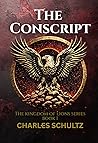
The Conscript by Charles Schultz
Genre: Dystopian Fantasy / Sci-Fi Fantasy
📢 Tagline
They promised leadership training. They delivered survival.
This tagline perfectly captures the core tension of the story—what begins as an opportunity quickly transforms into something far darker, more dangerous, and far more manipulative than anyone expected.
⚔️💀 Tropes & Story Elements
• Dystopian Fantasy ⚔️
• Sci-Fi Fantasy Blend
• Deadly Trials
• Hidden Truths / Government Secrets
• Found Family
• Coming-of-Age
• Survival Competition
• Political Intrigue
• Academy / Training Program
• Slow-Burn Character Growth
This book blends dystopian survival tension with fantasy and sci-fi elements in a way that feels immersive and cinematic. The training-program setup immediately hooks you, but what makes the story work so well is how quickly the polished surface begins to crack. Beneath the promises of leadership and opportunity lies manipulation, corruption, and a system designed to control far more than it protects.
The deadly-trial structure keeps the stakes consistently high while the emotional and political layers deepen with every chapter.
⚠️ Content & Trigger Warnings
• Violence and death
• Psychological manipulation
• Survival situations
• Emotional trauma
• Government corruption themes
• Mild romantic themes
The story explores survival under oppressive systems, and much of the emotional tension comes from realizing how deeply manipulation and control shape the world around the characters. The violence and danger throughout the trials create constant tension, while the psychological pressure of the system adds another layer of unease beneath the action.
🩸 Full Thoughts
The Conscript is the kind of dystopian fantasy that immediately pulls readers into its world and keeps tightening the tension with every new revelation. It combines survival-based trials, political deception, emotional growth, and dangerous hidden truths into a story that feels both classic and refreshingly modern.
At first, Dantin’s life inside Section 8 feels structured and almost comfortingly controlled. The dome provides safety, routine, and predictability. But that sense of order quickly begins to fracture the moment he’s selected for the Conscript program.
And once the cracks begin forming?
The story never stops escalating.
What initially appears to be a prestigious opportunity slowly reveals itself as something far more sinister. The deeper Dantin gets pulled into training, the more obvious it becomes that the government isn’t simply preparing future leaders—it’s hiding something dangerous beneath carefully manufactured loyalty and control.
That constant feeling of unease becomes one of the book’s strongest elements.
⚔️ Trials, Survival & Rising Stakes
The training and survival sequences are easily some of the most compelling parts of the book.
Every challenge feels purposeful rather than repetitive, constantly pushing the characters physically, emotionally, and psychologically. The tests aren’t simply about strength or intelligence—they’re about obedience, adaptability, sacrifice, and survival under pressure.
And what makes these sequences especially effective is how they continuously reveal pieces of the larger truth surrounding Natio and the Conscript system itself.
The danger feels real.
The consequences feel permanent.
And the escalating intensity keeps the pacing consistently engaging from beginning to end.
There’s also this constant underlying paranoia threaded through the story. Long before the full truth is revealed, you can feel that something about the system is deeply wrong—and that tension gives every interaction additional weight.
🖤 Dantin — Growth, Doubt & Identity
Dantin works so well as a protagonist because he feels genuinely human throughout the story.
He isn’t written as instantly heroic or exceptionally gifted beyond everyone else around him. Instead, he feels like someone trying to survive while slowly realizing that everything he’s been taught may be built on lies.
His emotional growth is gradual and believable.
At the start, he’s still shaped heavily by the controlled environment he was raised in, trusting the structure around him because he doesn’t fully know anything else. But as the trials intensify and the cracks in the system widen, he’s forced to question not only the government—but himself, his loyalties, and the kind of person he wants to become.
That internal conflict gives the story emotional depth beyond the survival elements alone.
Watching him shift from sheltered recruit into someone capable of challenging authority and fighting for truth feels incredibly satisfying.
🌍 World building — Controlled Perfection & Hidden Corruption
The world building is immersive without becoming overwhelming.
Heart City and the sixteen Sections feel expansive and believable, creating a dystopian society that feels carefully engineered rather than randomly oppressive. The structure of the world adds realism to the political tension because the system feels organized enough that people genuinely believe it exists for their protection.
Which makes the hidden corruption even more unsettling.
The dome itself becomes symbolic of the story’s larger themes—safety built on control, protection masking manipulation, and truth hidden behind manufactured order.
The sci-fi and fantasy elements blend naturally together, creating a setting that feels cinematic while still remaining emotionally grounded through Dantin’s perspective.
🔄 Pacing, Tension & Escalation
The pacing is one of the book’s biggest strengths.
The story steadily raises the stakes without losing focus on character development, allowing emotional investment to build alongside the action and mystery. Every new challenge reveals another layer of danger, and every revelation pushes the story into darker territory.
The twists land especially well because the book spends time developing both the world and the relationships before pulling the rug out from under the reader.
There’s always momentum.
Always another layer unfolding.
Always the feeling that survival alone may not be enough.
👥 Character Dynamics — Trust, Betrayal & Found Family
The found-family dynamics add real emotional weight to the story.
As Dantin forms friendships and alliances throughout the Conscript, those relationships become increasingly important because survival depends on trust in a world specifically designed to manipulate it.
What makes these dynamics work so well is that they never feel guaranteed.
Every alliance carries uncertainty.
Every friendship feels vulnerable to betrayal.
And because the system itself encourages competition and secrecy, even emotional connections feel risky.
That constant emotional tension strengthens the entire story.
⚖️ Why It Lands at 5 Stars
This book succeeds because it balances emotional growth with high-stakes survival exceptionally well:
✔ Addictive survival-trial structure
✔ Strong coming-of-age character arc
✔ Excellent political tension and hidden truths
✔ Immersive dystopian worldbuilding
✔ Emotional found-family dynamics
✔ Steady pacing and escalating stakes
It captures the addictive tension of classic dystopian survival stories while still building an identity fully its own.
🖤 Final Thoughts
The Conscript is an intense, emotionally engaging dystopian fantasy that delivers survival, political deception, dangerous trials, and meaningful character growth in equal measure.
It’s the kind of story that constantly keeps readers questioning the system, the motives behind the training, and who can truly be trusted once survival becomes more important than obedience.
Dark, suspenseful, and impossible to stop reading—this is dystopian fantasy done right.
