Jess—aka Reviews by Jess—is a sassy, top-ranked Goodreads reviewer who reads a little of everything. From steamy romance to dark fantasy, plus stories featuring mental health, hidden disabilities, and LGBTQ+ rep, she brings bold, unfiltered reviews readers can trust. Expect sass, sparkle, and a TBR that’s about to explode.

Reviews by Jess- Unfiltered. Unapologetic. Unforgettable Reviews.

Friday, April 3, 2026

Review: Onyx Storm

Onyx Storm

⭐⭐⭐⭐⭐

Onyx Storm by Rebecca Yarros

Genre: Romantasy / Fantasy Romance

📢 Tagline

When the truth ignites, even dragons can’t outrun the storm.

This tagline doesn’t just promise danger—it promises inevitability. Not just survival, not just war… but reckoning. The kind you can’t escape, no matter how powerful you are.

⚔️💀 Tropes & Story Elements

• Romantasy
• Fantasy Romance
• War & Rebellion
• Quest / Journey Beyond the Walls
• Found Family
• Political Intrigue
• Prophecy & Hidden Truths
• High-Stakes Survival
• Forbidden Secrets
• Established Romance Under Pressure
• Touch-Her-and-Die
• Morally Gray Love Interest

This installment takes the foundation built in the first two books and pushes it into full epic fantasy territory. The tropes evolve again—romance is no longer forming, it’s being tested. Found family is no longer just support, it’s something worth risking everything for. The “academy” structure is gone, replaced with a much wider, more dangerous world where survival depends on alliances, truth, and power.

This is no longer a contained story.

This is war on every level.

⚠️ Content & Trigger Warnings

• Graphic violence and war themes
• Death and loss
• Betrayal and deception
• Emotional trauma and high-stress situations
• Sexual content (consensual)
• Intense emotional / psychological stakes

The emotional intensity reaches its peak here. Loss feels heavier, betrayal cuts deeper, and the psychological strain on the characters is constant. This isn’t just about physical danger—it’s about the cost of truth, leadership, and love under pressure.

Everything hurts more in this book.

🩸 Full Thoughts

Onyx Storm is the moment everything finally breaks—and everything finally makes sense.

If Fourth Wing was survival and Iron Flame was awakening, this book is full-scale reckoning. Every secret, every lie, every choice comes crashing together in a way that feels both chaotic and completely intentional.

The scope of the story expands dramatically, but what makes it work is that the emotional core stays just as strong. This isn’t just about war—it’s about why the war exists, who controls it, and what it costs the people caught in the middle.

The pacing strikes a stronger balance here than the previous book. There’s still action, still chaos, still high-stakes tension—but there are also moments of pause, reflection, and emotional grounding that allow everything to hit harder.

This is the book where everything clicks.

And everything hurts.

⚔️ Scale, War & Expanding Stakes

The scale of Onyx Storm is massive—and it earns it.

We move beyond the academy, beyond familiar territory, into a world that feels bigger, more dangerous, and far less controlled. The war is no longer something looming in the background—it’s immediate, unavoidable, and deeply personal.

Battles are cinematic, layered, and high-impact, but what makes them stand out is the emotional weight behind them. Every fight matters—not just because of survival, but because of what’s at stake emotionally and politically.

This isn’t just escalation.

It’s culmination.

🖤 Violet — Leadership, Truth & Transformation

This is Violet at her most powerful—and her most complex.

She’s no longer reacting to the world around her. She’s actively shaping it. Challenging it. Refusing to accept the narratives she’s been given.

There’s a maturity here that feels completely earned.

She’s still vulnerable, still emotional, still human—but now there’s a sharp edge to her decisions. A willingness to make hard choices. To risk everything for truth, even when that truth could destroy her.

She doesn’t just survive anymore.

She leads.

🔥 Romance — Love Under Fire

The romance in Onyx Storm shifts from tension to endurance.

Violet and Xaden are no longer circling each other—they are fully connected, which makes everything infinitely more dangerous. Because now, it’s not just about whether they’ll choose each other.

It’s about whether they can hold onto each other when everything else is falling apart.

The trust between them is stretched to its limits. Secrets matter more. Responsibilities clash. And love becomes something that must survive pressure, distance, and impossible choices.

The chemistry is still there—intense, consuming—but it’s layered with pain, sacrifice, and emotional stakes that hit even harder than before.

This is love that fights to survive.

🌍 Worldbuilding — Myth, Truth & Expansion

This is where the world truly opens.

New lands, new allies, new threats—all introduced in a way that expands the story without losing focus. The mythology deepens significantly, adding layers of prophecy, hidden history, and long-buried truths that reshape everything we thought we understood.

The biggest shift?

The realization that the world has always been more complicated—and more dangerous—than it seemed.

This isn’t just expansion.

It’s revelation.

🔄 Revelations, Twists & Narrative Payoff

The twists in Onyx Storm don’t just shock—they reframe.

Moments that seemed small before suddenly carry massive weight. Truths come to light in ways that feel both surprising and inevitable. And the story continuously challenges what you think you know.

The pacing allows these reveals to land properly, giving space for impact while still maintaining momentum.

And the ending?

Absolutely devastating.

The kind that lingers.

👥 Character Ensemble — Loyalty, Sacrifice & Fracture

The supporting cast reaches new emotional heights here.

Relationships deepen, but they’re also tested in ways that feel real and often painful. Loyalty is no longer guaranteed—it’s chosen, again and again, under pressure.

The found family dynamic remains strong, but it evolves into something more fragile and more meaningful. These bonds are no longer just comforting—they are worth fighting for.

And sometimes… losing.

⚖️ Why It Lands at 5 Stars

This book delivers a powerful conclusion to everything that’s been building:

✔ Expands the world into full epic fantasy scale
✔ Gives Violet her strongest, most complete arc
✔ Evolves the romance into something deeper and more painful
✔ Delivers twists and revelations with real impact
✔ Balances action with emotional depth

It doesn’t just raise the stakes.

It fulfills them.

🖤 Final Thoughts

Onyx Storm is everything this series was building toward.

It’s bold, emotional, expansive, and devastating in all the right ways. It takes the chaos of the first two books and transforms it into something more intentional, more grounded, and far more impactful.

This is not just a continuation.

It’s a culmination.

And it proves exactly why this series has become a powerhouse in romantasy.

Review: Iron Flame

Iron Flame

⭐⭐⭐⭐⭐

Iron Flame by Rebecca Yarros

Genre: Romantasy / Fantasy Romance


📢 Tagline

Survive the war… or lose yourself to it.

This tagline hits deeper than the first book—because survival is no longer just physical. In Iron Flame, the real threat is what the war, the lies, and the truth will turn you into.


⚔️💀 Tropes & Story Elements

• Romantasy
• Fantasy Romance
• Enemies to Lovers (Evolving)
• Dragon Riders
• War College / Academy
• Political Intrigue
• Found Family
• High-Stakes Survival
• Slow Burn to Explosive Spice
• Betrayal & Secrets
• Touch-Her-and-Die
• Morally Gray MMC

This installment takes everything from Fourth Wing and evolves it into something sharper and more emotionally complex. The tropes don’t just exist—they shift. Enemies-to-lovers becomes trust-tested lovers. Found family is no longer just comfort—it’s risk. Even the academy trope transforms, becoming less about training and more about control, manipulation, and survival within a broken system.

What worked before is still here—but now it’s layered with consequences.

⚠️ Content & Trigger Warnings

• Graphic violence and war brutality
• Emotional trauma and grief
• Betrayal and manipulation
• Torture and endurance-based training
• Sexual content (consensual)
• High emotional intensity / angst-heavy

The tone is significantly darker in this installment. Violence is more intense, but it’s the emotional damage that lingers longer. The psychological toll of war, leadership, and betrayal becomes central, creating a story that feels heavier, more suffocating, and far more personal.

This is not just survival anymore—it’s endurance.

🩸Full Thoughts

Iron Flame is what happens when a story stops asking if you can survive—and starts asking what survival will cost you.

This sequel doesn’t play it safe. It expands the world, deepens the conflict, and leans fully into emotional devastation. Where Fourth Wing introduced chaos, Iron Flame weaponizes it.

The pacing is intense—almost overwhelming at times—but intentionally so. The story rarely allows you to breathe, mirroring the pressure Violet is under. Every chapter feels like it’s building toward something bigger, something darker, something you’re not sure you’re ready for.

And that constant tension? It works.

Because the stakes are no longer just external. They’re internal. Emotional. Psychological.

This isn’t just a continuation.

It’s an escalation in every sense.

⚔️ Scale, Action & Relentless Momentum

The scale of Iron Flame expands far beyond the academy walls.

What once felt contained now feels like it’s unraveling into something much larger—war, political instability, hidden truths, and systems built on lies. The danger is no longer isolated. It’s everywhere.

The action reflects that shift.

Battles are bigger, more chaotic, and carry heavier consequences. But what stands out most is how the tension never fully drops. Even outside of combat, there’s a constant sense of unease—like something is always about to go wrong.

However, unlike typical action-heavy sequels, this doesn’t feel like spectacle for the sake of it.

Every fight, every mission, every decision feeds into the larger unraveling of the world.

🖤 Violet — Power, Defiance & Identity

Violet’s growth in this book is where the story truly shines.

She’s no longer just trying to survive—she’s questioning everything. Authority. Truth. Loyalty. The system itself.

And that shift is powerful.

Her strength has never been physical, and Iron Flame doubles down on that. Her intelligence, her emotional resilience, and her refusal to accept things at face value become her greatest weapons.

But that growth comes at a cost.

She is pushed harder—emotionally and mentally—than before. The weight of knowledge, responsibility, and impossible choices begins to reshape her.

She doesn’t just grow stronger.

She becomes more dangerous.

🔥 Romance — Trust, Fracture & Fire

If Fourth Wing was tension…

Iron Flame is emotional warfare.

The relationship between Violet and Xaden is no longer about attraction—it’s about trust under pressure. And that trust is constantly tested.

Secrets matter more now. Choices carry weight. And love is no longer safe.

Xaden remains everything you want in a morally gray MMC—controlled, powerful, and layered—but here, his complexity becomes a source of conflict rather than just intrigue.

Their dynamic is sharper. More painful. More real.

The chemistry is still there—burning just as hot—but it’s tangled in doubt, sacrifice, and the kind of emotional tension that leaves your chest tight.

This is romance that hurts.

🌍 Worldbuilding — Expanding Truths & Cracks in the System

The world opens up significantly in this installment.

What once felt structured now feels unstable. The deeper Violet digs, the more it becomes clear that everything is built on incomplete truths—or outright lies.

The political intrigue is stronger here, adding layers of tension that extend beyond personal survival. There’s a growing sense that the real danger isn’t just the war—it’s the system controlling it.

And that realization shifts everything.

The world doesn’t just expand.

It fractures.

🔄 Pacing, Pressure & Emotional Overload

This is where Iron Flame may feel divisive for some readers—but it’s also one of its strongest choices.

The pacing is relentless.

There are very few moments of rest, very little emotional recovery between major events. The story moves quickly, often stacking tension on top of tension without release.

For some, this creates an incredibly immersive, edge-of-your-seat experience.

For others, it can feel overwhelming.

But within the context of the story—it works.

Because Violet isn’t getting a break either.

The structure mirrors the experience.

👥 Character Ensemble — Loyalty, Fracture & Found Family

The supporting cast becomes even more important here.

Relationships deepen—but they’re also tested. Trust becomes fragile. Loyalty becomes complicated. And not everyone remains who you thought they were.

The found family element is still present, but it’s no longer purely comforting.

It’s conditional.

And that shift adds emotional weight to every interaction.

You feel the bonds—but you also feel how easily they could break.

⚖️ Why It Lands at 5 Stars

This sequel succeeds because it doesn’t play it safe:

✔ Expands the world in meaningful ways
✔ Deepens character development—especially Violet
✔ Evolves the romance into something more complex and emotional
✔ Raises stakes across plot, politics, and personal conflict
✔ Delivers twists that hit harder and linger longer

It’s bigger, darker, and more emotionally layered—without losing what made the first book addictive.

🖤 Final Thoughts

Iron Flame is not just a sequel—it’s an emotional escalation.

It takes everything you loved about Fourth Wing and pushes it further—harder, deeper, and with far more at stake. This is a story about truth, trust, and what happens when both start to crack under pressure.

It’s intense. It’s chaotic. It’s emotionally exhausting in the best way.

And that ending?

Absolutely devastating.

Review: Fourth Wing

Fourth Wing

⭐⭐⭐⭐⭐

Fourth Wing by Rebecca Yarros

📢 Amazon Tagline

“Bond the dragon—or die trying.”

A tagline that doesn’t just hook you—it warns you. This story isn’t about survival being likely… it’s about survival being earned through blood, pain, and impossible odds.


🧷 Tropes / Genres

🐉 Romantasy
🔥 Fantasy Romance
⚔️ Enemies to Lovers
🐲 Dragon Riders
🏫 War College / Academy
📍 Forced Proximity
🖤 Found Family
🎭 Political Intrigue
💀 High-Stakes Survival
🔥 Slow Burn with Spice
🗡️ Touch-Her-and-Die
🌑 Bad Boy MMC / Shadow Daddy

⚠️ Content Warnings

🩸 Graphic violence and death
⚔️ War and military themes
🎭 Betrayal and political deception
🦴 Physical trauma / chronic illness rep
🔥 Sexual content (consensual)
💔 High emotional intensity

Full Thoughts

Fourth Wing doesn’t just meet expectations—it absolutely obliterates them. This is the kind of book that takes everything you love about romantasy and sharpens it into something more dangerous, more emotional, and far more addictive.

From the very first chapter, the tone is clear: this world does not care if you survive. Basgiath War College is ruthless, unforgiving, and built to break people—and that constant threat hangs over every single page. The pacing is relentless without feeling rushed, creating this perfect balance of tension, action, and emotional weight.

The dragon element isn’t just a cool fantasy feature—it’s foundational. These aren’t background creatures; they are powerful, opinionated, and deeply connected to the riders in a way that raises the stakes exponentially. Every interaction involving them feels charged with consequence.

What makes this story truly stand out, though, is how immersive it feels. You don’t just read it—you experience it. The fear, the adrenaline, the uncertainty… it all bleeds through the pages in a way that keeps you completely locked in.

🧠 Character Work — Strength, Strategy & Survival

Violet is one of the most compelling heroines in romantasy right now—and it’s because she isn’t the strongest in the traditional sense.

She’s physically at a disadvantage from the start, and the story never lets you forget it. But instead of turning her into an instant powerhouse, Yarros leans into her intelligence, adaptability, and sheer determination. Violet survives not because she’s the strongest—but because she refuses to quit.

Watching her navigate a world designed to kill her is incredibly satisfying. Every small win feels earned. Every setback hits harder.

And then there’s Xaden.

He’s everything you want in a morally gray MMC—dangerous, controlled, layered, and carrying secrets that shape every decision he makes. But what elevates him beyond the typical “shadow daddy” archetype is his restraint and emotional depth.

Their dynamic is pure tension: distrust, attraction, power shifts, and slow-building vulnerability. It never feels easy—and that’s exactly why it works.

🔥 Romance — Tension Over Time

The romance doesn’t rush—and that’s what makes it hit so hard.

This is not instalove. This is earned connection. Every interaction between Violet and Xaden builds on the last, layering tension, curiosity, and emotional risk.

The chemistry is undeniable, but what makes it unforgettable is the emotional foundation underneath it. Trust is fragile. Feelings are complicated. And the world around them constantly threatens to tear it all apart.

When the spice hits—it hits—but it’s the emotional tension leading up to it that makes it unforgettable.

🌍 Worldbuilding — Brutal, Immersive, Addictive

The worldbuilding here is expansive without being overwhelming.

Basgiath itself feels alive—structured, dangerous, and constantly shifting depending on power, alliances, and survival. The rules are clear, but the execution is unpredictable.

What makes the world truly shine is how it’s revealed. Instead of info-dumping, Yarros lets you learn through survival. You discover things as Violet does, which keeps the tension high and the immersion strong.

And just when you think you understand the system… the story reminds you that you don’t.

Plot & Twists — Controlled Chaos

This is where Fourth Wing absolutely dominates.

The pacing keeps you hooked, but it’s the unpredictability that keeps you obsessed. Alliances shift. Truths unravel. And just when you think you’ve figured things out—the story pivots.

The twists don’t feel cheap—they feel inevitable in hindsight, which is exactly what makes them so effective.

And the ending?

Devastating. Strategic. Perfectly executed chaos.

Why It Lands at 5 Stars

Because it delivers on every single level:

✔ Addictive, high-stakes plot
✔ Strong, intelligent, and realistic heroine
✔ Morally gray MMC with depth
✔ Romance that builds and earns its payoff
✔ Worldbuilding that feels immersive and dangerous
✔ Twists that genuinely shock without feeling forced

This isn’t just hype—it’s deserved.

🖤 Final Thoughts

This is romantasy at its absolute best.

It’s brutal, emotional, addictive, and impossible to put down. It takes familiar tropes and elevates them with stronger execution, deeper character work, and relentless tension.

If you love dragons, high-stakes survival, emotionally complex romance, and stories that refuse to let you feel safe—this is it.

And yes… it will ruin you (in the best way).

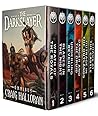
Review: The Darkslayer Monster-Sized Collection (16 Books, Series 1 and 2): Epic Sword & Sorcery Fantasy Adventure Series

The Darkslayer Monster-Sized Collection (16 Books, Series 1 and 2): Epic Sword & Sorcery Fantasy Adventure Series

The Darkslayer Monster-Sized Collection by Craig Halloran

Genre: Epic Fantasy / Sword & Sorcery
Rating: ⭐⭐⭐ (3 stars — massive, action-driven, but struggles with repetition and depth over time)

Tagline:
Brutal battles and endless war—but a journey that overstays its welcome.


16 Book Boxset: https://amzn.to/4coX7UQ 

Individual Books: https://amzn.to/4v8XNF5

⚔️💀 Tropes & Story Elements

• Epic Fantasy
• Sword & Sorcery
• Dark Fantasy
• Antihero Protagonist
• Found Family
• War & Survival
• Monster Hunting
• Political Intrigue
• Multi-POV Adventure
• Long-Form Saga

This series leans heavily into classic sword-and-sorcery DNA, pulling inspiration from older fantasy traditions where action, survival, and brute force take center stage over introspection. The antihero narrative drives much of the tone, while the found family elements attempt to ground the story emotionally—though not always successfully.

The inclusion of political intrigue and multi-POV storytelling adds scope, but the execution prioritizes momentum over nuance, making these elements feel more functional than deeply layered.

⚠️ Content & Trigger Warnings

• Graphic violence and gore
• War and battle brutality
• Death and loss
• Dark themes throughout
• Moral ambiguity

Violence is not just present—it’s constant.

This is a world where conflict is the default state, and the brutality is described in a way that reinforces the harshness of the setting. There’s very little emotional distance from the violence, which works for immersion but can become exhausting over such a long stretch of story.

The moral ambiguity is also consistent—there are no clear heroes or villains in the traditional sense. Instead, characters operate in shades of survival and self-interest, which adds realism but limits emotional attachment for some readers.


🩸 Full Thoughts

The Darkslayer Monster-Sized Collection is not just a series—it’s a full-scale endurance read. Spanning sixteen books and over a million words, it demands a level of commitment that mirrors the intensity of its world.

From the beginning, the tone is clear: this is a story rooted in brutality, survival, and constant conflict. There is very little softness here—no extended moments of peace, no long stretches of reflection. Instead, the narrative pushes forward with an almost relentless urgency, as if stopping would mean losing momentum entirely.

At its best, this creates an addictive reading experience. You fall into the rhythm of battle, consequence, escalation. The stakes are always high, and the world never feels safe.

But over time, that same intensity becomes overwhelming.

Without enough contrast—without quieter moments to ground the story emotionally—the experience begins to blur. The series becomes less about individual events and more about sustained chaos. And while that works in shorter bursts, across sixteen books it can feel like emotional and narrative fatigue begins to set in.

This is a series that thrives on scale and persistence—but struggles with balance.

⚔️ Scale, Action & Relentless Momentum

The scale of this series is one of its most impressive achievements.

Conflicts don’t just escalate—they compound. What begins as localized danger grows into widespread war, layered with political corruption, supernatural threats, and shifting alliances. Every book introduces new dangers, new enemies, and new complications, creating a sense that the world is constantly on the brink of collapse.

The action reflects that scale.

Battles are frequent, often brutal, and rarely predictable in outcome. There’s a raw, almost chaotic energy to the fight sequences that reinforces the idea that survival is never guaranteed.

However, the pacing rarely shifts.

There’s little distinction between:
• A major battle
• A minor skirmish
• A turning point in the war

Because everything is delivered at the same intensity level, the story loses a sense of hierarchy. Key moments don’t always feel bigger than the rest—they just feel like part of the ongoing storm.

In shorter series, this kind of pacing creates excitement.

Here, it creates saturation.

🖤 Venir — The Core of the Chaos

Venir is the embodiment of this world.

He is not a character designed for emotional relatability—he’s a character designed for impact. His identity is built on violence, survival, and the curse that defines him. He doesn’t question his role; he exists within it.

That makes him compelling in a very specific way.

He feels consistent. Grounded in the tone of the story. A constant in a world that is otherwise shifting and unstable.

But that consistency comes at a cost.

Over the course of sixteen books, Venir’s emotional and psychological growth is limited. He reacts, he fights, he survives—but he doesn’t significantly evolve. His internal world remains largely unchanged, even as the external world around him escalates.

For readers who enjoy archetypal antiheroes, this works.

For readers looking for transformation, it can feel like something is missing.

Because the story changes.

The world changes.

But Venir largely stays the same.

🌍 Worldbuilding — Wide, But Not Always Deep

The world of Bish is expansive in every sense.

There are multiple regions, political factions, power structures, and supernatural elements all interacting at once. The presence of underlings, royal corruption, and ancient threats gives the world a strong foundation for conflict.

On a surface level, it’s immersive.

You understand:
• The dangers
• The power dynamics
• The stakes

But the depth doesn’t always match the breadth.

The story often prioritizes movement over exploration. We move through the world quickly—battle to battle, city to city—without always stopping long enough to fully absorb the cultural, emotional, or historical weight of those places.

As a result, the world feels active—but not always fully lived-in.

It’s a stage for conflict more than a space for immersion.

🔄 Repetition & Structural Fatigue

This is where the series struggles the most—and where the length becomes a challenge rather than a strength.

The narrative structure follows a recognizable cycle:

• Conflict arises
• Characters respond with violence
• Alliances shift
• New threat emerges
• Repeat

Individually, this structure is effective.

Repeated sixteen times, it becomes predictable.

The issue isn’t that the events are boring—it’s that they begin to feel interchangeable. The uniqueness of each moment gets lost in the repetition of the overall pattern.

This creates a kind of reading fatigue where:

• Major plot points lose their impact
• Emotional beats don’t land as strongly
• The story feels longer than it needs to be

The series doesn’t lack content—it lacks variation.

👥 Character Ensemble — Ambitious but Uneven

The large cast is one of the series’ most ambitious elements.

There are multiple characters with their own arcs, motivations, and roles in the broader conflict. This should add richness to the story—and at times, it does.

Certain characters stand out, bringing new perspectives and emotional layers to the narrative.

But the execution is uneven.

Because the story is so focused on action and forward momentum, not every character gets the development they need. Some arcs feel incomplete, while others feel overshadowed by more dominant storylines.

The frequent POV shifts also contribute to this imbalance.

Instead of deepening emotional investment, they sometimes dilute it—pulling the reader away just as a connection begins to form.

The result is a cast that feels large and active… but not always deeply memorable.

⚖️ Why It Lands at 3 Stars

This is a series that clearly succeeds in delivering on its core promise—but struggles with longevity.

It excels in:
✔ Consistent action
✔ Expansive scope
✔ Classic dark fantasy tone

But falls short in:
• Emotional progression
• Narrative variation
• Character depth across the full series

The biggest issue isn’t quality—it’s sustainability.

What works in the early books becomes harder to maintain across sixteen installments. The lack of evolution in structure, pacing, and character arcs makes the experience feel repetitive over time.

This isn’t a bad series.

It’s a series that needed more balance to match its ambition.


🖤 Final Thoughts

The Darkslayer Monster-Sized Collection is a bold, unapologetic commitment to action-driven fantasy.

It knows exactly what it wants to be—and it never strays from that identity.

For the right reader, that consistency is a strength. This is a series you can sink into for endless battles, dark magic, and antihero-driven chaos.

But for others, that same consistency becomes limitation.

Without enough variation in pacing, emotional depth, or character evolution, the experience begins to feel repetitive—especially when consumed all at once.

This is not a series meant to be rushed.

It’s one best experienced slowly, in pieces, where its strengths can shine without its repetition becoming overwhelming.

Because while the world is massive…

…staying immersed in it for that long is a challenge of its own.